The Role of Waste Segregation in Achieving Zero-Waste Targets The corporate push towards achieving verifiable “zero-waste-to-landfill” status has fundamentally changed how major organisations manage their internal operations. This ambitious environmental goal requires that every single piece of refuse generated within the facility is either recycled, composted, or repurposed, completely bypassing traditional landfill disposal. However, a significant gap exists between drafting a corporate sustainability manifesto and executing the complex logistics required on the ground. The most critical point of failure in any zero-waste initiative is the daily management of waste streams at the individual employee level. If the internal sanitation team is not fully integrated into the sustainability strategy, the entire system collapses into cross-contamination, rendering the recyclable materials useless and destroying the company’s environmental compliance metrics.
The primary logistical challenge is human behaviour. Despite clear signage and colour-coded bins, employees consistently place non-recyclable items into the recycling streams. A single half-full cup of coffee thrown into a paper recycling bin instantly contaminates the entire receptacle. Once a batch of recycling is heavily soiled with organic matter, municipal processing facilities will reject it, forcing the entire load into a landfill. This constant cross-contamination is the death knell for any zero-waste target. Managing this requires a facility maintenance team that acts as an active, daily filtration system. They cannot simply empty bins blindly; they must be trained to identify and correct contamination at the source before the waste leaves the building.
Composting introduces an even higher level of complexity to the daily maintenance routine. Many progressive offices now provide compost bins in their breakrooms to capture food scraps and biodegradable packaging. However, managing organic waste requires strict hygiene protocols to prevent the rapid development of foul odours and the attraction of urban pests. The bins must be emptied much more frequently than standard refuse, and the receptacles themselves must be thoroughly sanitised daily to prevent the buildup of bacterial slime. If the sanitation team treats a compost bin like a standard trash can, the resulting hygiene issues will quickly force management to abandon the composting program entirely, derailing the broader sustainability goals.
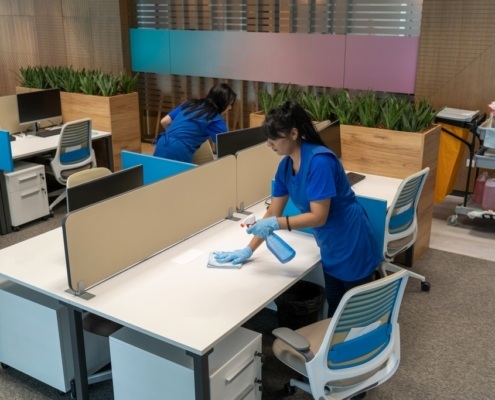
Achieving a genuine zero-waste operation requires abandoning standard janitorial contracts and engaging a highly specialised cleaning service for offices NYC that specifically understands the mechanics of environmental compliance. These advanced teams work closely with sustainability directors to audit the daily waste flow. They provide detailed reporting on which departments are failing to segregate properly, allowing management to target their internal educational campaigns. Furthermore, these teams manage the complex logistics of moving multiple segregated waste streams from the office floor to the secure loading dock without ever mixing the materials or causing a hygiene hazard in the freight elevators.
Ultimately, a zero-waste target is an operational discipline, not a marketing slogan. It requires an unbroken chain of custody from the employee’s desk to the municipal processing centre. The daily maintenance team is the critical link in that chain. By treating your sanitation provider as an active partner in your environmental strategy, you ensure that your ambitious sustainability goals translate into verifiable, data-backed reality, proving to your stakeholders that your commitment to environmental responsibility is absolute and highly functional.
Conclusion
Achieving zero-waste-to-landfill status is impossible without rigorous, daily waste segregation. Employee cross-contamination frequently destroys entire batches of recyclable materials, derailing sustainability metrics. Success requires a specialised sanitation team trained to actively monitor, separate, and manage complex recycling and composting streams without creating hygiene hazards.
Call to Action
Ensure your corporate sustainability goals become a verifiable reality with our compliance-focused waste management and sanitation protocols. Reach out to our environmental specialists today to integrate your maintenance routine with your zero-waste targets.