

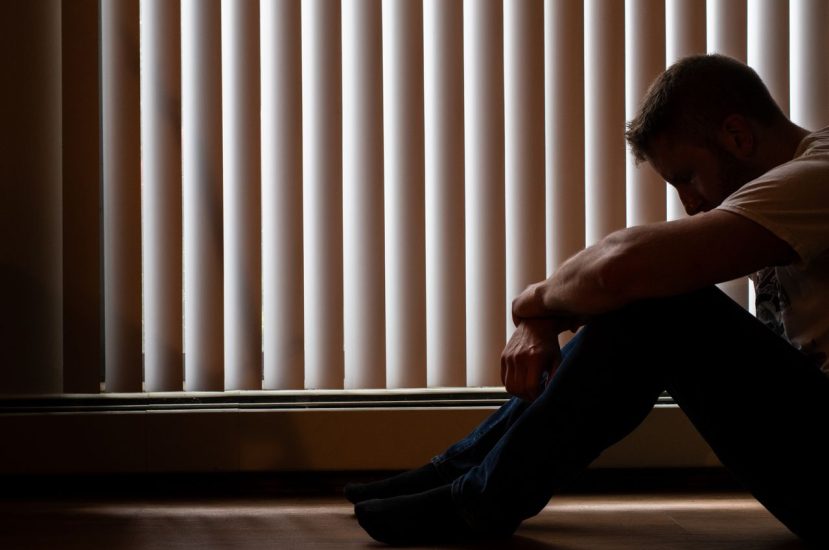
Every astrologer eventually notices that certain planetary patterns appear more often in charts of people who have struggled with depression. That does not mean these aspects create depression on their own. Astrology describes tendencies, emotional landscapes, and periods of increased vulnerability. Mental health is influenced by genetics, life experiences, physical health, environment, and many other factors that cannot be reduced to a birth chart.
Still, some placements deserve attention because they repeatedly show up in consultations with people who describe long periods of emotional heaviness, loss of motivation, loneliness, or difficulty finding joy. Looking at these signatures can help explain why certain experiences feel so overwhelming and why some people carry emotional weight that others never seem to encounter.
Here are five of the most common indicators astrologers associate with depression.
1. Saturn conjunct the Moon
Few aspects are discussed more often in astrology than Saturn conjunct the Moon.
The Moon represents emotional needs, comfort, childhood experiences, and the ability to feel safe. Saturn represents limitation, responsibility, fear, isolation, and maturity through hardship. When these two bodies meet, emotions often become tightly controlled.
People with this aspect frequently describe growing up in environments where expressing feelings was discouraged or simply impossible. They may have learned very early that vulnerability was risky, so they became the responsible child, the caretaker, or the one who never complained.
Instead of processing emotions naturally, they often analyze them, suppress them, or carry them privately for years.
This placement does not automatically indicate depression, but it can create a lifelong tendency to experience emotions through Saturn’s filter. Happiness may feel temporary, while worries seem permanent. Even during objectively positive periods, there can be an underlying feeling that something will eventually go wrong.
During difficult Saturn transits, these individuals sometimes experience depressive episodes more intensely because the natal pattern becomes activated.
The conjunction can also make people extremely resilient. Many eventually develop remarkable emotional endurance because they have spent years learning how to survive difficult circumstances. That resilience often comes later in life rather than early.
2. Saturn square the Moon
Unlike the conjunction, Saturn square the Moon often creates an internal conflict between emotional needs and the demands of reality.
The Moon seeks comfort and connection.
Saturn asks for discipline, patience, and emotional restraint.
With the square, these two parts of the personality pull in opposite directions.
Many astrologers notice recurring themes of self-criticism with this aspect. Instead of allowing themselves to feel sadness, people often judge themselves for having those feelings in the first place. This creates a cycle where emotional pain is followed by guilt or shame, making recovery more difficult.
Relationships can become complicated because asking for support may feel uncomfortable. Some individuals believe they must solve every problem alone, even when help is available.
When major Saturn transits activate this natal square, feelings of loneliness or emotional exhaustion may become much more noticeable.
The square does not remove happiness from someone’s life, but it often makes emotional security something that has to be built consciously rather than something that comes naturally.
3. Saturn conjunct the Sun or Saturn square the Sun
The Sun symbolizes identity, confidence, life force, and the feeling that you have a place in the world.
When Saturn is conjunct the Sun or Saturn squares the Sun, self-worth often becomes one of life’s central lessons.
People with these aspects frequently hold themselves to exceptionally high standards. They may accomplish impressive things while believing they still are not doing enough.
Compliments can feel undeserved.
Success may be dismissed as luck.
Mistakes become impossible to forget.
Many astrologers associate these aspects with an inner authority figure that is never satisfied. Even after achieving major goals, the internal voice continues pointing toward what remains unfinished.
This relentless pressure can contribute to depressive periods, especially when expectations become unrealistic.
These aspects also appear in charts of people who carried significant responsibilities from an early age or experienced criticism from authority figures during childhood.
As maturity develops, many individuals learn to replace harsh self-judgment with realistic expectations. Saturn improves with age, which is one reason many people with strong Saturn aspects report feeling emotionally stronger after their Saturn return.
4. Hard Moon-Pluto aspects
Although Saturn receives much of the attention, Moon square Pluto, Moon opposite Pluto, and sometimes Moon conjunct Pluto also appear frequently in charts where emotional intensity plays a major role.
Pluto magnifies everything it touches.
When connected to the Moon through difficult aspects, emotions rarely remain on the surface.
These individuals often experience feelings with extraordinary depth. Losses leave lasting marks. Betrayal is difficult to forget. Childhood experiences may continue influencing emotional reactions decades later.
Depression connected to Pluto often looks different from Saturn.
Saturn tends to create emotional heaviness, pessimism, or numbness.
Pluto can produce emotional extremes. Someone may swing between feeling completely detached and feeling overwhelmed by emotions they struggle to control.
Trust also becomes a significant theme.
People with strong Moon-Pluto aspects may hide emotional pain because revealing it feels unsafe. Others may have no idea how much they are carrying internally.
The positive side of Pluto is remarkable psychological strength. Many therapists, researchers, healers, and people interested in psychology have prominent Pluto aspects because they naturally explore emotional complexity rather than avoiding it.
5. Difficult Saturn transits to the Moon or Sun
Sometimes depression is connected less to the birth chart itself and more to timing.
One of the clearest examples is transiting Saturn conjunct the natal Moon, transiting Saturn square the natal Moon, transiting Saturn opposite the natal Moon, transiting Saturn conjunct the natal Sun, transiting Saturn square the natal Sun, or transiting Saturn opposite the natal Sun.
These transits often coincide with periods where life feels considerably heavier than usual.
Responsibilities increase.
Energy decreases.
Isolation becomes more noticeable.
People may question their direction, relationships, career, or sense of purpose.
Events occurring during these transits often require maturity and patience rather than immediate solutions.
For someone who already has natal Saturn-Moon or Saturn-Sun aspects, these periods can feel especially demanding because the existing pattern is being activated once again.
Fortunately, Saturn transits are temporary.
Many astrologers notice that clients describe these periods as emotionally difficult while they are happening, but years later they recognize them as important turning points that reshaped priorities and strengthened personal boundaries.
Astrology Is Never the Whole Story
No single aspect can diagnose depression.
A birth chart containing several of these signatures does not guarantee someone will struggle with mental illness, just as a chart without them does not guarantee emotional well-being.
Professional astrologers always examine the chart as a whole.
The condition of the Moon, the ruler of the first house, the fourth house, the twelfth house, current transits, progressions, planetary dignity, and overall chart balance all contribute to understanding someone’s emotional landscape.
If someone is experiencing persistent sadness, hopelessness, loss of interest in daily life, changes in sleep or appetite, or thoughts of self-harm, astrology should never replace support from a qualified mental health professional.
Astrology can offer valuable insight into emotional cycles and recurring patterns, but depression is a medical condition that deserves proper care. Used responsibly, astrology works best as a tool for self-understanding alongside evidence-based treatment, healthy relationships, and practical support.



Leave a comment